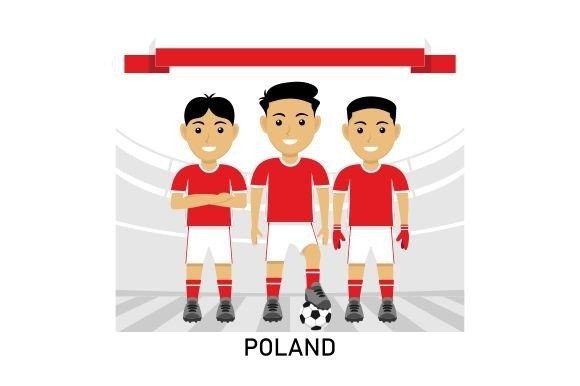
Evaluating World Cup Goall Illustrations for Multi-Platform Design Projects
When sourcing visual assets for sports-themed projects, designers and content creators often face a choice between generic stock photography and specialized vector art. World Cup Goall Illustrations represent a distinct category of design resource that bridges the gap between editorial specificity and commercial versatility. Unlike standard raster images captured during live events, these illustrations are constructed as scalable vector graphics intended for adaptation across diverse media. For professionals aged 20 to 50 managing print-on-demand businesses, publishing children’s books, or creating seasonal merchandise like Easter products, understanding the technical and practical distinctions of this asset type is essential for making informed procurement decisions.
The primary value proposition of World Cup Goall Illustrations lies in their format flexibility and thematic adaptability. While traditional sports imagery is often locked into specific moments, teams, or copyrighted likenesses, illustrated goal scenes offer a stylized interpretation of the sport. This abstraction allows for broader usage rights and easier customization. When evaluating whether this specific illustration style fits your current workflow, it is necessary to compare it against alternative visual solutions based on scalability, editability, and cross-platform application.
Vector Versatility Compared to Raster Alternatives
The most significant differentiator when comparing World Cup Goall Illustrations to standard sports stock photos is the underlying file architecture. The inclusion of AI (Adobe Illustrator) and EPS formats indicates a true vector foundation. For designers working on large-format items like tote bags or small-format items like phone cases, this distinction dictates production quality.
- Infinite Scalability: Raster alternatives (JPG/PNG only) suffer from pixelation when resized beyond their native resolution. Vector-based goal illustrations maintain crisp edges whether printed on a 2-inch sticker or a 6-foot banner. This makes them superior for product lines requiring size variations without purchasing multiple assets.
- Color Manipulation: Photographs require complex masking and color grading to match brand palettes. With AI/EPS files, changing a jersey color or background hue to match an Easter pastel theme or a specific corporate identity takes seconds via direct path editing. This reduces pre-production time significantly compared to raster editing workflows.
- Element Isolation: Stock photos contain baked-in backgrounds. World Cup Goall Illustrations typically feature layered compositions where players, balls, nets, and confetti can be separated, rearranged, or deleted entirely. This modularity is critical for creating seamless patterns for printed paper or pillow textiles where negative space management is key.
However, vectors have tradeoffs. They lack the photorealistic texture and emotional grit of high-resolution photography. If the project demands documentary authenticity or raw athletic intensity, illustrated assets may feel too sanitized or playful. The decision hinges on whether the end-use requires artistic representation or factual documentation.
Cross-Media Application: From Children’s Books to Merchandise
A major evaluation factor for this asset class is its suitability across disparate markets. World Cup Goall Illustrations are frequently marketed with a dual-purpose nature: energetic enough for sports fans yet accessible enough for younger audiences or holiday adaptations.
Children’s Book Design Considerations
For illustrators and self-publishers, consistency is paramount. Using a single pack of goal illustrations ensures character and style continuity throughout a narrative. Compared to commissioning custom art, which is expensive and slow, or using disparate stock images, which look disjointed, a cohesive illustration set provides a unified visual language. The vector format allows authors to adjust composition ratios for different page layouts (portrait vs. landscape) without losing fidelity. However, users must verify that the illustration style matches the reading level; highly detailed technical diagrams suit older readers, while simplified goal celebrations fit early learners.
Merchandise and Seasonal Adaptation
The mention of "Suitable For Easter" alongside World Cup themes highlights a unique niche: seasonal hybridization. Standard sports assets rarely accommodate holiday overlays effectively. Because these illustrations are editable vectors, designers can integrate Easter eggs, bunnies, or spring flora directly into the goal scene without jarring compositing artifacts. This contrasts with pre-made "Easter Sports" clipart, which is often low-resolution and stylistically limited.
For physical products like T-shirts and phone cases, the included 300dpi PNG and JPG files serve as immediate production-ready assets for DTG (Direct-to-Garment) or sublimation printing. The 300dpi standard is the industry benchmark for print clarity. When comparing options, always verify this specification; many competitors offer 72dpi web-quality files that fail in physical production. Having both transparent PNG and flattened JPG versions provides redundancy for different RIP software requirements.
Technical Specifications and Workflow Integration
Evaluating the download package reveals much about the resource's professional utility. A comprehensive delivery including AI, EPS, JPG (300dpi), and PNG (300dpi) addresses the needs of multiple stakeholders in a production pipeline.
- AI Format: Best for deep editing, rebranding, and pattern creation. Requires Adobe Illustrator or compatible software (Affinity Designer, CorelDRAW). Essential for designers who need to modify geometry.
- EPS Format: The universal vector exchange format. Crucial for collaboration with print shops or clients using legacy systems. Ensures compatibility when the recipient lacks specific Adobe licenses.
- PNG 300dpi: Ideal for non-designers, social media managers, or quick mockups. Supports transparency for overlaying on colored backgrounds (tote bags, dark T-shirts).
- JPG 300dpi: Optimized for CMYK print workflows where transparency isn't needed, such as full-bleed book covers or patterned wrapping paper. Smaller file size than PNG facilitates faster uploads to POD platforms.
When comparing this package to free alternatives or single-format downloads, the multi-format inclusion reduces friction. Free resources often lack source files, locking users into uneditable states. Single-format premium packs may force conversion processes that degrade quality. The bundled approach represents a balance of accessibility and professional control.
Decision Factors: When to Choose Illustrated Assets
World Cup Goall Illustrations are not a universal replacement for all sports visuals. Determining fit requires honest assessment of project constraints.
Choose Illustrations When:
- You require trademark-safe imagery that evokes the spirit of the game without infringing on specific team logos or player likenesses.
- The project involves mixed-media applications (e.g., matching social media posts, physical products, and book interiors).
- Customization is mandatory (color changes, element removal, seasonal adaptation).
- Budget constraints prevent hiring a bespoke illustrator but quality standards exceed generic clipart.
Seek Alternatives When:
- Historical accuracy or specific event documentation is required.
- The target audience expects photorealism (e.g., sports analytics blogs, news reporting).
- You lack vector editing capabilities and cannot utilize the AI/EPS files, rendering 80% of the asset's value inaccessible.
- The project is strictly digital-only at fixed dimensions, making high-res vector scalability unnecessary overhead.
Evaluating Quality Beyond Keywords
SEO-friendly descriptions often emphasize keywords like "World Cup," "Goal," and "Easter," but practical evaluation requires looking deeper. Assess line weight consistency, color mode (CMYK vs. RGB), and layer organization. Poorly organized vector files with merged paths and unnamed layers negate the editability advantage. High-quality World Cup Goall Illustrations should feature logical grouping, allowing users to toggle visibility or isolate elements effortlessly.
Additionally, consider licensing terms relative to intended use. Some illustration packs restrict commercial resale or limit print runs. Comparing the license agreement against your business model is as important as evaluating visual style. A cheaper asset with restrictive licensing may ultimately cost more if you need to upgrade later or face compliance issues.
Social Media and Digital Pattern Applications
Beyond physical goods, these illustrations excel in digital environments. For social media, the bold lines and vibrant colors typical of goal celebrations perform well in thumbnail sizes and feed scrolling. Unlike subtle photography that loses impact on mobile screens, stylized illustrations retain readability. The ability to export custom-sized crops from the master AI file means creating Instagram Stories, Pinterest pins, and Facebook headers from a single source without maintaining multiple PSD files.
For pattern design on printed paper or pillows, vector illustrations enable seamless tiling through precise mathematical alignment. Raster-based pattern creation often involves tedious cloning stamp work to hide seams. With vector assets, designers can define pattern swatches natively within Illustrator, adjusting scale and rotation non-destructively. This workflow efficiency is a decisive factor for surface pattern designers comparing resource types.
Ultimately, World Cup Goall Illustrations occupy a strategic middle ground in the design ecosystem. They offer more creative freedom than photography and higher production value than basic clipart. By carefully weighing technical specifications against project requirements, professionals can determine whether this versatile asset class aligns with their production goals or if alternative solutions better serve their specific niche. The inclusion of comprehensive file formats suggests a resource built for professional adaptation, but realizing that potential depends entirely on the user's capability to leverage vector workflows effectively.