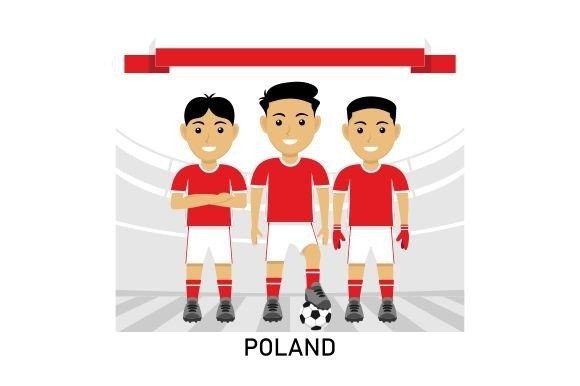
Evaluating World Cup Player Vector Illustrations for Professional Design Projects
When sourcing visual assets for sports-related campaigns, editorial content, or merchandise, the distinction between generic soccer clip art and specialized World Cup player illustrations is significant. A dedicated World Cup player vector asset is not merely a depiction of an athlete kicking a ball; it is a stylized representation that incorporates specific cultural, athletic, and tournament-associated aesthetics. These resources are typically delivered in EPS format, ensuring they remain 100% vector-based and fully scalable without pixelation. For designers and project managers comparing options, understanding the technical and practical implications of these files is essential for making an informed procurement decision.
The primary value proposition of these illustration packs lies in their editability within Adobe Illustrator. Unlike raster images or flattened PDFs, true vector EPS files allow for granular control over every element. This includes the ability to modify object colors in RGB mode, reshape anatomical proportions, and reorganize layered groups. However, not all vector assets are created equal. Evaluating whether a specific World Cup soccer player character illustration meets professional standards requires looking beyond the JPEG preview and assessing the underlying file architecture, licensing flexibility, and stylistic relevance to your specific audience.
Technical Specifications and File Integrity
For professionals aged 20 to 50 who manage design workflows, the technical construction of a vector file often matters more than the initial visual appeal. When evaluating World Cup player graphics, the claim of being "100% vector" must be verified. Some marketplaces sell hybrid files where complex textures or shadows are embedded raster images masked within a vector path. While these may look acceptable at standard sizes, they fail when scaled for large-format printing or when a designer attempts to change the color palette. True vector illustrations rely entirely on mathematical paths and anchor points, ensuring infinite scalability and complete color customization.
The organization of shapes within the Adobe Illustrator file is another critical decision factor. High-quality World Cup player assets feature well-organized layers and grouped objects. For example, the player’s jersey, shorts, cleats, and facial features should be separated into distinct, logically named groups. This structural integrity significantly reduces production time. If a client requests a change from a red kit to a blue kit, a well-organized file allows for a global color replacement in seconds. Conversely, poorly constructed vectors with merged paths or excessive anchor points can turn a simple revision into a tedious reconstruction task. When comparing resources, always check if the provider guarantees clean topology and logical grouping.
Color mode is equally important depending on the end use. Most digital-first World Cup player illustrations are provided in RGB color mode, which offers a vibrant gamut suitable for web design, social media graphics, and video overlays. However, if your project involves physical merchandise like t-shirts, posters, or stadium signage, you must evaluate how easily these RGB vectors convert to CMYK or Pantone spot colors. Vectors designed specifically for print often include predefined swatches, whereas purely digital assets may require manual color correction to avoid dullness in print output. Understanding this distinction prevents costly reprints or last-minute design compromises.
Stylistic Approaches and Visual Relevance
World Cup soccer player illustrations generally fall into several distinct stylistic categories, each serving different communication goals. Comparing these styles against your project brief is necessary to avoid aesthetic misalignment. Flat design vectors, characterized by solid colors and minimal shading, are currently dominant in UI/UX design and corporate infographics. They convey information quickly and load fast on websites but may lack the emotional intensity required for fan engagement or dramatic editorial spreads.
In contrast, semi-realistic or dynamic vector styles utilize gradients, opacity masks, and complex pathing to simulate movement and muscle definition. These are often better suited for hero banners, event promotion, and merchandise where visual impact is paramount. However, they come with tradeoffs. Complex vector styles result in larger file sizes and can be more difficult to edit. Changing the skin tone or uniform color in a gradient-heavy illustration requires adjusting multiple mesh points rather than simply swapping a fill color. Designers must weigh the need for visual dynamism against the practical constraints of future editability.
Cultural and tournament specificity also differentiates World Cup player assets from general soccer graphics. Authentic World Cup illustrations often incorporate subtle design cues such as specific trophy silhouettes, host nation patterns, or historically accurate kit designs. Generic soccer vectors lack this contextual grounding. If your content is tied to a specific tournament cycle or national team, using generic assets can make the work feel dated or disconnected. Conversely, highly specific assets may have a shorter shelf life once the tournament concludes. Evaluating the longevity of the illustration style is crucial for projects intended to remain relevant beyond a single event.
Comparing Vector Assets Against Alternative Formats
While vector EPS files offer superior flexibility, they are not universally the best choice for every scenario. It is helpful to compare World Cup player vectors against other common graphic formats to determine the most efficient resource for your needs. Raster illustrations (JPEG/PNG) are often less expensive and require no specialized software to view. For a one-off blog post or a low-resolution internal presentation, a high-quality JPEG sample preview might suffice. However, raster files lock you into a fixed resolution and color scheme. Any attempt to extract elements or adapt the image for a different background will require destructive editing in Photoshop, leading to quality loss.
3D renders represent another alternative gaining traction in sports design. 3D World Cup player characters offer photorealistic lighting and perspective that 2D vectors cannot replicate. Yet, 3D assets demand significantly higher computational resources and specialized rendering knowledge. Unless your team has established 3D pipelines, purchasing pre-rendered 3D images offers little advantage over vectors regarding customization. Vectors remain the middle ground of versatility: they are more editable than rasters and more accessible than 3D, making them the optimal choice for teams that need to iterate quickly across multiple media formats.
AI-generated imagery has also entered the comparison landscape. While AI tools can produce unique soccer player concepts instantly, they currently lack the precise layer structure and clean geometry of hand-crafted vector EPS files. AI outputs are typically raster-based and contain unpredictable artifacts that are difficult to isolate or recolor accurately. For professional branding where consistency and legal clarity are non-negotiable, curated vector packs still hold a distinct advantage over generative alternatives. The predictability of well-organized shapes ensures that the final output matches the brand guidelines exactly, something probabilistic AI models cannot yet guarantee.
Decision Factors for Licensing and Usage Rights
Beyond technical and aesthetic considerations, licensing terms frequently dictate which World Cup player illustration is viable for commercial use. Not all vector packs grant the same level of freedom. Some licenses restrict usage to personal projects or limit the number of impressions for commercial work. Others prohibit the use of the illustration in logos or trademarks, even if the file is fully editable. When researching options, carefully review whether the license covers your intended distribution channels, including digital ads, broadcast graphics, and physical products.
Trademark sensitivity is particularly acute with World Cup themes. Official tournament marks and team crests are heavily protected intellectual property. Reputable vector providers create original character illustrations that evoke the spirit of the World Cup without infringing on registered trademarks. Using assets that too closely mimic official branding can expose organizations to legal risk. Therefore, the safest and most sustainable choice is often a stylized, generic interpretation that captures the athleticism and excitement of the sport without utilizing protected symbols. This approach ensures long-term usability regardless of changing sponsorship landscapes or official branding updates.
Finally, consider the support and update policy of the resource provider. Sports fashion evolves rapidly; kit designs and player hairstyles change every season. Vector packs that receive periodic updates or include modular components (interchangeable heads, boots, accessories) offer better long-term value than static collections. For agencies managing multiple clients or ongoing campaigns, investing in a comprehensive, well-maintained library of World Cup soccer player characters is often more cost-effective than licensing individual assets repeatedly. By prioritizing file organization, stylistic versatility, and clear licensing, professionals can select vector resources that streamline production while maintaining high creative standards.