Squad Team World Cup Cameroon: Leveraging High-Resolution Vector Assets for Modern Design
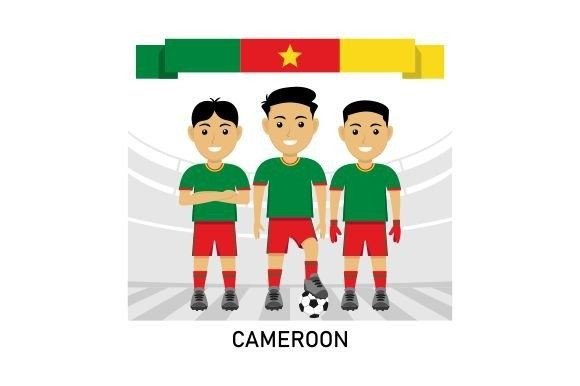
The visual identity of international football is built on iconic imagery, and few national teams possess a graphic legacy as distinct as the Indomitable Lions. For designers, marketers, and content creators, accessing high-quality representations of the Squad Team World Cup Cameroon is not merely about nostalgia; it is a functional necessity for producing professional-grade work. In an era where digital content must seamlessly translate across physical merchandise, large-format printing, and responsive web layouts, the technical specifications of source files matter as much as the artistic composition. The availability of comprehensive asset packs containing 100 vector files has fundamentally shifted how creatives approach sports-related projects, moving away from restrictive raster images toward fully resizable, editable formats that include AI, EPS, and PSD options.
This shift reflects a broader evolution in creative workflows. Professionals no longer have the luxury of designing for a single medium. A campaign featuring the Squad Team World Cup Cameroon might require a billboard design at CMYK 300 PPI for print fidelity, alongside social media graphics optimized for RGB screens. Having a centralized library of vector assets ensures consistency across these touchpoints. When everything is resizable without loss of quality, the friction between concept and execution decreases significantly. This efficiency is critical for freelancers and agencies operating under tight deadlines during tournament seasons, where the demand for timely, culturally accurate, and technically sound visuals peaks rapidly.
The Technical Advantage of Vector Formats in Sports Graphics
Understanding why specific file formats are included in these collections is essential for maximizing their utility. The inclusion of AI (Adobe Illustrator) and EPS (Encapsulated PostScript) files addresses the core need for scalability. Unlike JPEG or PNG files, which rely on a fixed grid of pixels, vector graphics use mathematical equations to define lines, curves, and colors. This means that whether you are printing a badge on a pen or wrapping a bus with Squad Team World Cup Cameroon imagery, the edges remain crisp and the colors stay vibrant. For businesses producing official merchandise or promotional materials, this resolution independence is non-negotiable. It prevents the pixelation and blurriness that can cheapen a brand’s perception and alienate passionate fanbases.
Furthermore, the provision of PSD (Photoshop Document) files bridges the gap between pure vector illustration and photo-realistic compositing. While vectors handle logos, typography, and geometric patterns perfectly, many designs require textured overlays, lighting effects, or integration with player photography. Layered PSD files allow designers to manipulate these elements non-destructively. When combined with CMYK 300 PPI color profiles, these files ensure that what is seen on the monitor translates accurately to the printing press. This specific technical configuration caters directly to professional print shops and commercial publishers who require industry-standard deliverables. By offering both vector and raster-editable formats, these asset packs support hybrid workflows that reflect how modern design actually happens.
Evolving Standards in Digital Asset Management
The relevance of a curated collection like Squad Team World Cup Cameroon extends beyond individual files; it speaks to the changing habits of digital asset management. Historically, sourcing sports graphics involved navigating fragmented repositories, dealing with inconsistent styles, or risking copyright issues with low-resolution internet searches. Today, creators prioritize organized, comprehensive libraries over scattered freebies. A pack containing 100 distinct vector files offers a cohesive design system rather than isolated artifacts. This allows for the creation of varied yet unified campaigns, where icons, backgrounds, textures, and typographic treatments all share a common visual language.
This trend aligns with the expectations of modern audiences who consume content across multiple platforms simultaneously. Fans expect the same level of polish in an Instagram story as they do on a stadium banner. When creators utilize standardized, high-quality assets, they maintain brand integrity regardless of the output size. Additionally, the ability to edit every element within AI and EPS files supports localization and customization. A marketing team can easily adjust colorways to match specific sponsors, alter text for different regional markets, or update squad numbers as rosters change, all without rebuilding the design from scratch. This adaptability is crucial in the fast-paced environment of international sports, where agility often determines the success of a campaign.
Practical Applications for Diverse Creative Professionals
The utility of these resizable assets spans a wide spectrum of users, each with distinct objectives and constraints. For entrepreneurs and small business owners in the apparel sector, access to CMYK 300 PPI vector files reduces the barrier to entry for producing high-quality fan gear. Instead of hiring expensive illustrators to recreate complex emblems from scratch, they can leverage existing, professionally crafted vectors to focus their budget on manufacturing and distribution. This democratization of design resources enables smaller players to compete visually with larger brands, provided they respect licensing terms and add unique creative value.
Educators and bloggers also benefit significantly from having editable source files. When creating educational content about African football history or analyzing tactical formations, the ability to isolate specific graphical elements enhances clarity and engagement. Rather than using generic stock photos, an educator can extract clean, scalable diagrams or historical badges to illustrate points precisely. For freelance designers, possessing a robust library of Squad Team World Cup Cameroon assets serves as a force multiplier. It allows them to take on more clients during peak seasons by reducing production time per project. The inclusion of layered PSDs specifically aids those who specialize in digital art and photo manipulation, enabling rapid iteration and client revisions without compromising file integrity.
Navigating Quality and Authenticity in Design
While technical specifications like 300 PPI and vector formats are paramount, the cultural authenticity of the assets remains equally important. The Squad Team World Cup Cameroon represents a rich heritage that resonates deeply with millions. Designs utilizing these assets should honor that context. High-resolution vectors provide the canvas, but the creator provides the narrative. Professionals should avoid treating these files as mere clip art; instead, they should be viewed as foundational components of a larger storytelling effort. This means paying attention to correct color codes, respecting traditional motifs, and ensuring that modifications do not distort the cultural significance of the symbols.
Moreover, the practical implication of having 100 files is the opportunity for experimentation. With such a vast array of elements, designers can test multiple visual directions quickly. A/B testing different poster layouts, merchandise mockups, or social media templates becomes feasible when the underlying assets are modular and editable. This iterative approach leads to stronger final outcomes because it is based on exploration rather than limitation. In a market saturated with generic sports content, the depth and flexibility offered by comprehensive vector packs enable creators to produce work that stands out through specificity and craftsmanship.
Future-Proofing Creative Workflows
As display technologies continue to advance with higher pixel densities and variable aspect ratios, the demand for resolution-independent assets will only intensify. Investing in or utilizing collections that prioritize AI, EPS, and PSD formats is a forward-looking strategy. It insulates creators against obsolescence. A design created today at 300 PPI for a standard brochure can be repurposed tomorrow for a 4K video overlay or a massive trade show backdrop without requiring regeneration. This longevity maximizes the return on investment for both the asset creator and the end user.
Ultimately, the intersection of cultural passion and technical precision defines the modern landscape of sports design. The Squad Team World Cup Cameroon asset ecosystem exemplifies this convergence. By providing everything in resizable formats with professional print specifications, these resources empower a diverse community of adults—from hobbyists to agency directors—to express their enthusiasm with professionalism and clarity. The focus shifts from struggling with inadequate tools to mastering the art of communication. As workflows continue to evolve, the principles embodied by these high-quality vector collections—flexibility, fidelity, and accessibility—will remain central to effective visual storytelling in the digital age.