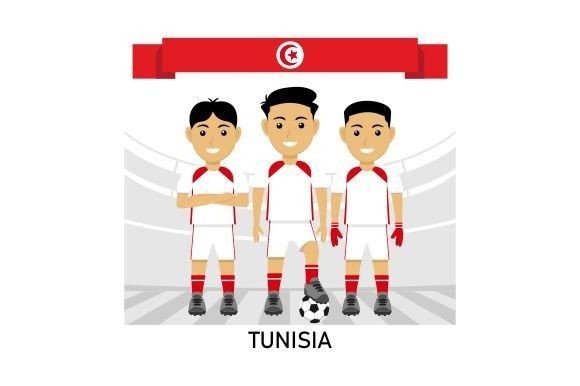
Designing for the Carthage Eagles: A Guide to Squad Team World Cup Tunisia Vector Assets
The FIFA World Cup represents the pinnacle of international football, a global spectacle where national pride, athletic excellence, and visual identity converge. For designers, marketers, and content creators, covering an event of this magnitude requires more than just enthusiasm; it demands high-quality, professional-grade assets. When focusing on the Tunisian national team, known affectionately as the Carthage Eagles, having access to premium design resources is essential. Specifically, utilizing a comprehensive package like "Squad Team World Cup Tunisia - 100 Vector Files" can transform a standard project into a polished, broadcast-ready production.
This guide explores the significance of these digital assets, breaking down technical specifications like AI, EPS, PSD, CMYK, and 300 PPI. Whether you are a seasoned graphic designer preparing merchandise or a beginner creating fan content, understanding how to leverage these resizable vector files will ensure your work honors the rich heritage of Tunisian football while meeting modern professional standards.
The Cultural and Visual Significance of Tunisian Football Identity
Before diving into file formats, it is crucial to understand what you are designing. The visual identity of the Tunisia national team is steeped in history and symbolism. The primary colors—red and white—are derived from the national flag, representing purity and the blood of martyrs. The central emblem often features the eagle, a symbol of power and sovereignty that links modern Tunisia to its ancient Carthaginian roots.
When working with Squad Team World Cup Tunisia assets, you are not merely arranging shapes; you are communicating a narrative. High-quality vector files allow designers to maintain the integrity of these symbols across vastly different mediums. A pixelated or distorted crest on a banner or social media post can unintentionally signal disrespect or amateurism. By using professional source files, creators ensure that the cultural weight of the team is represented with the clarity and dignity it deserves during the World Cup stage.
Understanding Vector Graphics: Why Resizability Matters
The core value proposition of this asset pack is the inclusion of 100 Vector Files. For those new to design, understanding the difference between raster and vector graphics is fundamental.
- Raster Images (JPEG, PNG): Made of pixels. When enlarged, they lose quality and become blurry or "pixelated."
- Vector Files (AI, EPS): Made of mathematical paths. They can be scaled infinitely—from a business card to a stadium billboard—without ever losing sharpness.
In the context of World Cup coverage, versatility is key. You might need the Tunisian squad logo for a tiny Instagram story icon one moment and a massive backdrop for a podcast studio the next. Because everything in this collection is resizable, you eliminate the need to hunt for multiple resolutions. This efficiency is vital in the fast-paced environment of sports media, where turnaround times are tight and quality cannot be compromised.
Breaking Down the File Formats: AI, EPS, and PSD
A professional asset pack typically includes three distinct file types, each serving a specific purpose in the design workflow. Understanding when to use which file is a hallmark of experienced designers.
- AI (Adobe Illustrator): This is the native source file for vector graphics. It contains all editable layers, paths, and typography. If you need to change the shade of red to match a specific brand guideline or modify the layout of the squad list, the AI file is your primary workspace. It offers maximum flexibility.
- EPS (Encapsulated PostScript): Think of EPS as the universal language of vector graphics. While AI files require Adobe software, EPS files can be opened by almost any vector editing program, including CorelDRAW and Inkscape. EPS is also the industry standard for print shops and large-format printing. If you are sending designs to a vendor for t-shirts or banners, they will likely request the EPS version.
- PSD (Photoshop Document): While vectors handle logos and typography, PSDs are essential for photo manipulation and texturing. In a World Cup context, you might use the PSD files to composite player photos with vector overlays, add lighting effects, or create web-optimized graphics. The inclusion of PSD files bridges the gap between pure vector art and realistic image editing.
Technical Standards: CMYK and 300 PPI Explained
The specification "CMYK 300 PPI" is not just technical jargon; it is a guarantee of print readiness. Many free assets found online are RGB (Red, Green, Blue) at 72 PPI, which is perfect for screens but disastrous for physical products.
The Importance of CMYK Color Mode
Screens emit light using RGB, while printers reflect light using ink in CMYK (Cyan, Magenta, Yellow, Key/Black). The color gamuts are different. A vibrant neon red on your monitor may print as a dull maroon if not properly converted. Assets labeled as CMYK have been pre-calibrated for physical output. This ensures that the iconic Tunisian red appears consistent whether it is viewed on a phone screen or printed on official merchandise.
Why 300 PPI is the Benchmark
PPI (Pixels Per Inch) determines the density of information in a rasterized export or texture. While true vectors are resolution-independent, any embedded textures or exported proofs within the package adhere to the 300 PPI standard. This is the minimum requirement for high-quality offset printing. Using anything less results in jagged edges and visible dot patterns. By providing files at this density, the asset pack ensures that your final physical outputs look crisp and professional.
Practical Applications in Modern Media and Business
How do these assets fit into real-world workflows? The applications extend far beyond simple fan art.
- Sports Journalism and Blogging: Create custom featured images, infographics showing squad statistics, and header graphics that stand out in search results.
- Merchandise Design: Develop print-ready files for apparel, mugs, posters, and stickers. The vector format ensures clean lines on fabric and vinyl.
- Social Media Management: Maintain brand consistency across platforms. Resize a single master vector file for Twitter headers, Facebook posts, and TikTok overlays without quality loss.
- Event Branding: Design signage, tickets, and wristbands for watch parties or local tournaments celebrating the Tunisian team.
- Educational Content: Teachers and presenters can use clean, scalable maps and flags to discuss geography, culture, and sports history without worrying about copyright strikes associated with unauthorized photo usage.
Common Misunderstandings About Digital Asset Packs
Even with high-quality tools, users often encounter pitfalls due to misconceptions about how these files work.
Misconception 1: "Vectors are always small file sizes."
While simple logos are lightweight, a pack containing 100 detailed files with complex gradients and meshes can be substantial. Always ensure you have adequate storage and processing power.
Misconception 2: "I can edit text in any viewer."
To edit the typography in AI or EPS files, you must have the specific fonts installed on your system. Otherwise, the software will substitute them, potentially altering the design. Professional packs often include font links or outline the text to preserve appearance.
Misconception 3: "CMYK looks wrong on my screen."
This is normal. CMYK colors often appear flatter on RGB monitors. Trust the color values and proof prints rather than relying solely on screen accuracy for physical products.
Ethical Usage and Licensing Considerations
Finally, it is imperative to address the legal and ethical dimensions of using squad team assets. While a design resource pack provides the tools (vectors, layouts, templates), users must remain vigilant regarding intellectual property rights. FIFA and national federations hold strict trademarks on official emblems and tournament branding.
When using these assets for commercial purposes, always verify the license included with the download. Some packs are for editorial use only, while others may allow commercial modification. Furthermore, distinguish between generic representations of the team and protected trademarks. Responsible design involves respecting the legal frameworks that govern international sports, ensuring your creativity supports the game without infringing on the rights of the organizations that make it possible.
Conclusion
The "Squad Team World Cup Tunisia - 100 Vector Files" package represents more than just a collection of digital drawings; it is a foundational toolkit for visual storytelling. By combining the scalability of AI and EPS formats with the textural capabilities of PSD, and adhering to the rigorous CMYK 300 PPI standard, these assets empower creators to produce work that is both aesthetically stunning and technically sound. Whether you are celebrating the Carthage Eagles through print, web, or merchandise, mastering these resources allows you to participate in the global conversation of the World Cup with professionalism, respect, and creative excellence.