Designing for the Green Falcons: A Complete Guide to Squad Team World Cup Saudi Arabia Vector Assets
The intersection of international sports and graphic design creates a unique demand for high-quality, culturally accurate visual assets. When it comes to the Squad Team World Cup Saudi Arabia, designers, marketers, and content creators face a specific challenge: capturing the national identity with precision while maintaining technical flexibility. Whether you are creating merchandise, digital banners, or educational materials, having access to professional-grade vector files is not just a convenience—it is a necessity.
This guide explores the significance of utilizing specialized vector asset packs for the Saudi Arabian national team. We will break down why file formats like AI, EPS, and PSD matter, explain the importance of CMYK 300 PPI standards, and demonstrate how these resources fit into modern creative workflows. By understanding the technical and cultural foundations of these assets, you can elevate your projects from amateur fan art to professional-grade design.
The Cultural and Visual Significance of the Saudi National Team
Before diving into file specifications, it is essential to understand what you are designing. The Saudi Arabian national football team, often referred to as the Green Falcons, carries a visual identity deeply rooted in national heritage. The primary color is a distinct shade of green representing Islam and the nation’s flag, often paired with white accents. However, simply picking a generic green hex code is rarely sufficient for professional work.
Official squad representations involve intricate details that raster images (like standard JPEGs) cannot handle gracefully. These include:
- Typography: Arabic calligraphy used in player names and team crests requires precise vector curves to remain legible at any size.
- Crest Details: The palm tree and crossed swords emblem contains fine lines that pixelate easily when resized without vector data.
- Kit Patterns: Modern World Cup kits often feature subtle geometric patterns inspired by local architecture or textiles, which require scalable graphics to reproduce correctly.
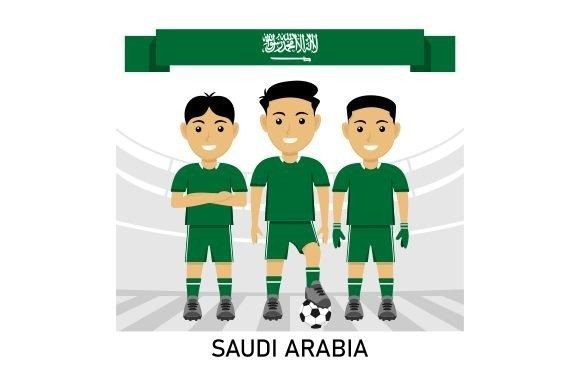
When you utilize a dedicated "Squad Team World Cup Saudi Arabia" asset pack containing 100 vector files, you are acquiring a library of culturally verified elements. This ensures that your designs respect the source material while providing the versatility needed for diverse applications.
Understanding Vector Files: Why Resizability Matters
A common misunderstanding among beginners is that all image files function the same way. In reality, the distinction between raster and vector graphics is the single most important factor in sports design. Raster images are made of pixels; vectors are made of mathematical paths.
The Power of "Everything is Resizable"
The phrase "everything is resizable" is the core value proposition of this asset collection. In the context of World Cup media, your design might need to exist as a small social media avatar and simultaneously as a massive stadium banner or billboard. With raster graphics, scaling up results in blurriness and artifacting. With the included AI and EPS files, you can scale the Saudi squad graphics to the size of a building without losing a single ounce of clarity.
This resizability is crucial for:
- Merchandise Production: T-shirts, scarves, and mugs require crisp edges for screen printing and embroidery digitizing.
- Large Format Printing: Banners and posters for watch parties or retail displays demand infinite scalability.
- Digital Responsiveness: Web assets must look sharp on both mobile screens and 4K monitors.
Technical Breakdown: AI, EPS, and PSD Formats
The asset pack includes three distinct file types, each serving a specific role in the design ecosystem. Understanding when to use which file will streamline your workflow significantly.
AI (Adobe Illustrator) Files
The AI file is the native source format. It retains all editable layers, anchor points, and text objects. If you need to change a player's name, adjust the shade of green to match a specific brand guideline, or modify the composition of the squad lineup, the AI file is your starting point. It offers maximum control and is the industry standard for vector editing.
EPS (Encapsulated PostScript) Files
Think of EPS as the universal translator of vector graphics. While AI files require Adobe software, EPS files can be opened by CorelDRAW, Affinity Designer, Inkscape, and various other vector editors. Including EPS files ensures compatibility across different platforms and operating systems. For print shops and third-party vendors who may not use Adobe products, EPS is often the required delivery format.
PSD (Photoshop Document) Files
While vectors are superior for logos and typography, PSD files bridge the gap to photo manipulation. The included PSD files likely contain smart objects linked to the vector data. This allows you to place the Saudi squad graphics onto photographic mockups, apply texture overlays, or integrate them into complex digital compositions while retaining the ability to edit the underlying vector non-destructively.
Print Standards: Demystifying CMYK and 300 PPI
For designers accustomed to web work, the specification "CMYK 300 PPI" might seem redundant since vectors are resolution-independent. However, this specification is vital for two reasons: embedded content and color accuracy.
Why CMYK?
Screens display color using RGB (Red, Green, Blue) light. Printers create color using CMYK (Cyan, Magenta, Yellow, Key/Black) ink. The vibrant green of the Saudi kit can shift dramatically if converted incorrectly from RGB to CMYK. By providing files pre-configured in CMYK, the asset pack ensures that the colors you see on screen are achievable on paper. This prevents the disappointment of dull, muddy prints after production.
The Role of 300 PPI in Vector Packs
You might ask, "If vectors have no resolution, why specify 300 PPI?" This metric applies to any raster effects, textures, or embedded photos within the file. Furthermore, it sets the correct document parameters for export. When you eventually export your vector design as a PNG or TIFF for a client or printer, the document will default to professional print quality rather than low-resolution web standards. It serves as a safety net ensuring output fidelity.
Practical Applications in Modern Workflows
How do these assets translate to real-world scenarios? The utility of a comprehensive Saudi Arabia World Cup squad pack extends far beyond simple fan posters.
Commercial and Retail Design
Retailers preparing for World Cup seasons need rapid turnaround times. Having 100 pre-made, resizable assets allows for the quick creation of point-of-sale displays, window decals, and promotional flyers. The consistency provided by a unified asset pack ensures that branding remains cohesive across physical and digital touchpoints.
Journalism and Editorial Content
Sports journalists and bloggers covering the tournament require infographics that visualize squad statistics, formation tactics, and player profiles. Vector assets allow for the creation of clean, informative diagrams that load quickly on websites and look professional in PDF reports. The ability to edit text and colors means these templates can be updated instantly as squad lists change during the tournament.
Educational and Community Projects
Schools, community centers, and cultural organizations often host World Cup viewing events or educational sessions about participating nations. High-quality, respectful visual aids help engage audiences. Using professional vector files avoids the pixelated, low-effort aesthetic that can sometimes undermine the perceived value of community events.
Best Practices for Utilizing Your Asset Pack
To maximize the value of your Squad Team World Cup Saudi Arabia vector collection, consider the following best practices:
- Organize Your Library: With 100 files, organization is key. Create folders categorized by type (e.g., Logos, Player Silhouettes, Backgrounds, Typography) to reduce search time during tight deadlines.
- Verify Licensing: Always check the specific usage rights associated with the asset pack. While the files are technically resizable and editable, intellectual property regarding official team trademarks may still apply depending on your commercial intent.
- Master Smart Objects: When using the PSD files, learn to use Smart Objects properly. This allows you to update the master vector file and have those changes reflect automatically across all your Photoshop mockups.
- Color Profile Management: Even though the files are CMYK, ensure your monitor is calibrated and your workspace settings match the intended output device for the most accurate color representation.
Conclusion
The Squad Team World Cup Saudi Arabia vector asset pack represents more than just a collection of digital files; it is a foundational toolkit for visual storytelling. By combining cultural relevance with technical excellence—spanning AI, EPS, and PSD formats at CMYK 300 PPI standards—these resources empower creators to produce work that is both visually stunning and professionally viable.
Whether you are a seasoned graphic designer preparing a major campaign or an enthusiast creating tribute art, understanding the "why" and "how" behind these files transforms your approach. You move from merely placing images to crafting scalable, print-ready, and culturally resonant designs. In the fast-paced world of international sports, having the right tools ensures that your creativity keeps pace with the game itself.